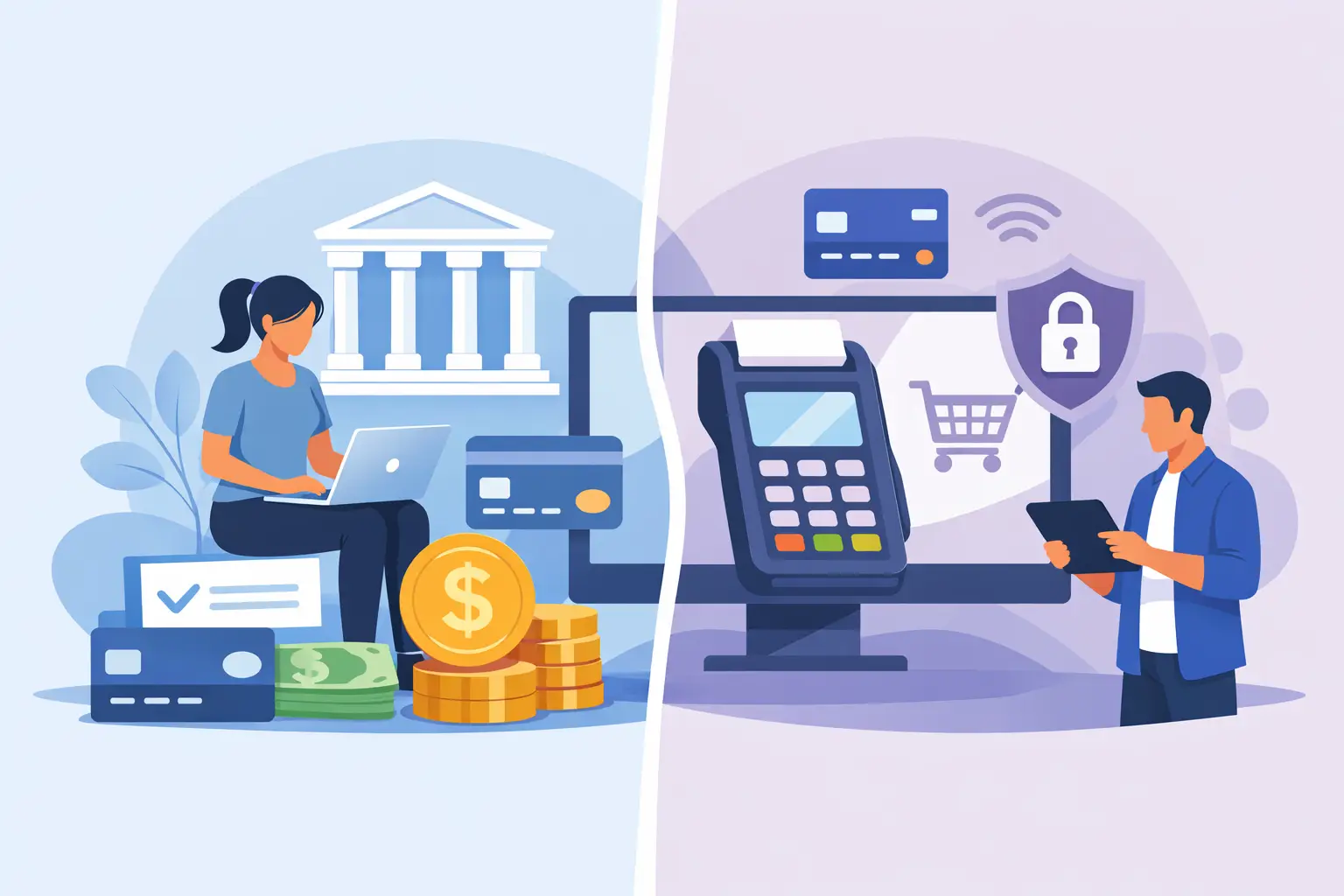
A customer reaches your checkout page, enters a card number, and expects a confirmation in seconds. Behind that moment, two different pieces of payment infrastructure do very different jobs. Understanding the merchant account vs payment gateway decision matters because a great checkout experience means little if your funds are held, transactions are declined, or your account cannot support the way you sell.
For high-risk online merchants, the question is rarely whether to use a merchant account or a payment gateway. Most businesses need both. The real decision is whether those tools are connected, approved for your business model, and built to keep revenue moving as your volume grows.
Merchant Account vs Payment Gateway: The Core Difference
A merchant account is a financial account that allows your business to accept card payments. It sits within the acquiring side of the payments ecosystem and provides a Merchant Identification Number, often called a MID. When a customer pays you, the merchant account is where the transaction is processed before funds are settled to your business bank account.
A payment gateway is the technology that securely sends payment information from your website, payment form, or virtual terminal to the processor. It encrypts card data, submits authorization requests, receives approval or decline responses, and passes that result back to your checkout.
Put simply, the gateway is the messenger. The merchant account is the approved financial relationship that gives your business the ability to accept the payment in the first place.
That distinction becomes critical when you operate in a category that mainstream providers view as high risk. A gateway can make your checkout look polished, but it cannot override an underwriting decision, eliminate account restrictions, or solve a payout problem. Your payment infrastructure must be aligned from the start.
What a Merchant Account Does for Your Business
Your merchant account connects your business to an acquiring bank and card networks through a payment processor. It is responsible for the financial side of card acceptance: approving your business to process, applying underwriting rules, tracking transaction activity, managing disputes, and settling eligible funds.
When a buyer submits a payment, the card issuer checks whether the card is valid and whether the customer has available funds. If the transaction is authorized, the payment still needs to be captured and settled. Your merchant account is central to that process.
For an eCommerce business, merchant account quality shows up in operational outcomes. It affects how quickly you can get approved, the transaction types you can run, how much processing volume you can support, how disputes are handled, and when your money reaches your bank account.
Why high-risk underwriting changes the equation
High-risk does not mean a business is illegitimate. It usually means the processor sees greater exposure based on your industry, recurring billing model, average order value, fulfillment timeline, chargeback history, or projected sales volume.
A generic processor may accept an application quickly, then review the account again once transactions begin. That is where merchants can face sudden holds, reserves, volume caps, or account closures. These disruptions are especially damaging for businesses that pay for advertising, inventory, affiliates, or fulfillment before customer revenue fully settles.
A purpose-built high-risk merchant account is underwritten with your actual model in view. That does not mean every business receives identical terms. It means your provider should assess your business honestly, set clear expectations, and build an approval path that matches the way you operate.
What a Payment Gateway Does at Checkout
The gateway is the customer-facing engine of your payment flow, even though buyers may never see it. It connects your site or payment application to the processor, protects sensitive payment data in transit, and returns a decision quickly enough to keep checkout moving.
For a WordPress store, the gateway typically connects through a compatible plugin or integration. For a phone order or remote sale, it may provide a virtual terminal where authorized staff can key in a transaction. For subscription businesses, it can store tokenized payment credentials and send recurring charges according to your billing schedule.
A capable gateway also gives you day-to-day control. Depending on the setup, you may be able to review approvals and declines, issue refunds, capture previously authorized payments, run voids, manage recurring billing, and monitor transactions from a single dashboard.
Gateway features that matter for online merchants
Do not choose a gateway solely because it has a familiar name or a low advertised price. The right feature set depends on your sales process.
If you sell subscriptions, recurring billing controls and tokenized card storage are essential. If you take orders by phone, you need a secure, usable virtual terminal. If your revenue depends on a WordPress storefront, confirm that the gateway supports your checkout environment before committing. If you use custom development, your team may need reliable APIs, clear documentation, and support during implementation.
Fraud tools matter too, but they require judgment. Address verification, card security code checks, velocity rules, and transaction filters can reduce bad orders. Set them too aggressively, however, and legitimate customers may be declined. The goal is not to block every questionable transaction. It is to reduce avoidable fraud without sacrificing good revenue.
Why Most Businesses Need Both
A merchant account without a gateway is often insufficient for online selling. You may have approval to process cards, but no practical way to collect them through your website, payment links, or recurring billing system.
A gateway without a compatible merchant account has the opposite problem. The technology can collect and transmit payment data, but it still needs an approved processor relationship to authorize transactions and settle funds.
Some providers package both services together. That can simplify setup because there is one onboarding process, a coordinated technical configuration, and fewer parties to contact when something breaks. For high-risk merchants, a combined solution can also reduce the risk of a gateway setup that does not match the approved merchant category, billing model, or transaction volume.
There are cases where separate providers make sense. A larger merchant with in-house developers may want the flexibility to use a specific gateway while negotiating directly for acquiring services. But separation adds responsibility. When a transaction fails, you need to know whether the issue sits with the gateway, processor, bank, integration, fraud settings, or your website.
How to Choose the Right Payment Setup
Start with the way revenue actually enters your business, not with a generic processing quote. Be direct about your products, refund policy, subscription terms, fulfillment process, expected monthly volume, average transaction amount, and prior processing history. In high-risk payments, incomplete information early on can create expensive problems later.
Then evaluate the merchant account and gateway as one operating system. Ask whether the account supports your industry and billing model. Confirm expected payout timing, reserve terms, volume limits, chargeback support, and dashboard visibility. If daily payouts and no rolling reserve are priorities, get the terms clearly established as part of underwriting rather than relying on a broad marketing promise.
On the gateway side, confirm compatibility with your store and workflow. Test the checkout path, refund process, subscription controls, and virtual terminal before sending paid traffic to the site. A technically successful connection is not enough if your team cannot easily handle customer service, cancellations, or order issues.
You should also understand your compliance responsibilities. A gateway helps protect payment data, but merchants still need to follow the applicable PCI requirements for their setup. Using hosted fields, secure payment forms, and tokenization can reduce your exposure to raw card data. It does not give your business permission to handle sensitive data carelessly.
Build for Revenue Continuity, Not Just Approval
Fast approval feels like the finish line when you have been rejected by other providers. It is only the beginning. The stronger question is whether your payment setup can support the next six months of sales without creating preventable friction around payouts, recurring charges, customer disputes, or technical changes.
Myco Solutions works with merchants that need a high-risk payment environment built around practical control: online checkout support, WordPress compatibility, virtual terminal access, subscription billing capabilities, transaction visibility, and hands-on setup. That kind of specialization matters when payment acceptance is central to your ability to operate.
Choose a provider that can explain the financial relationship and the technology connection in plain language. When your merchant account and payment gateway are aligned, checkout becomes what it should be: a dependable part of your business, not another source of uncertainty.